
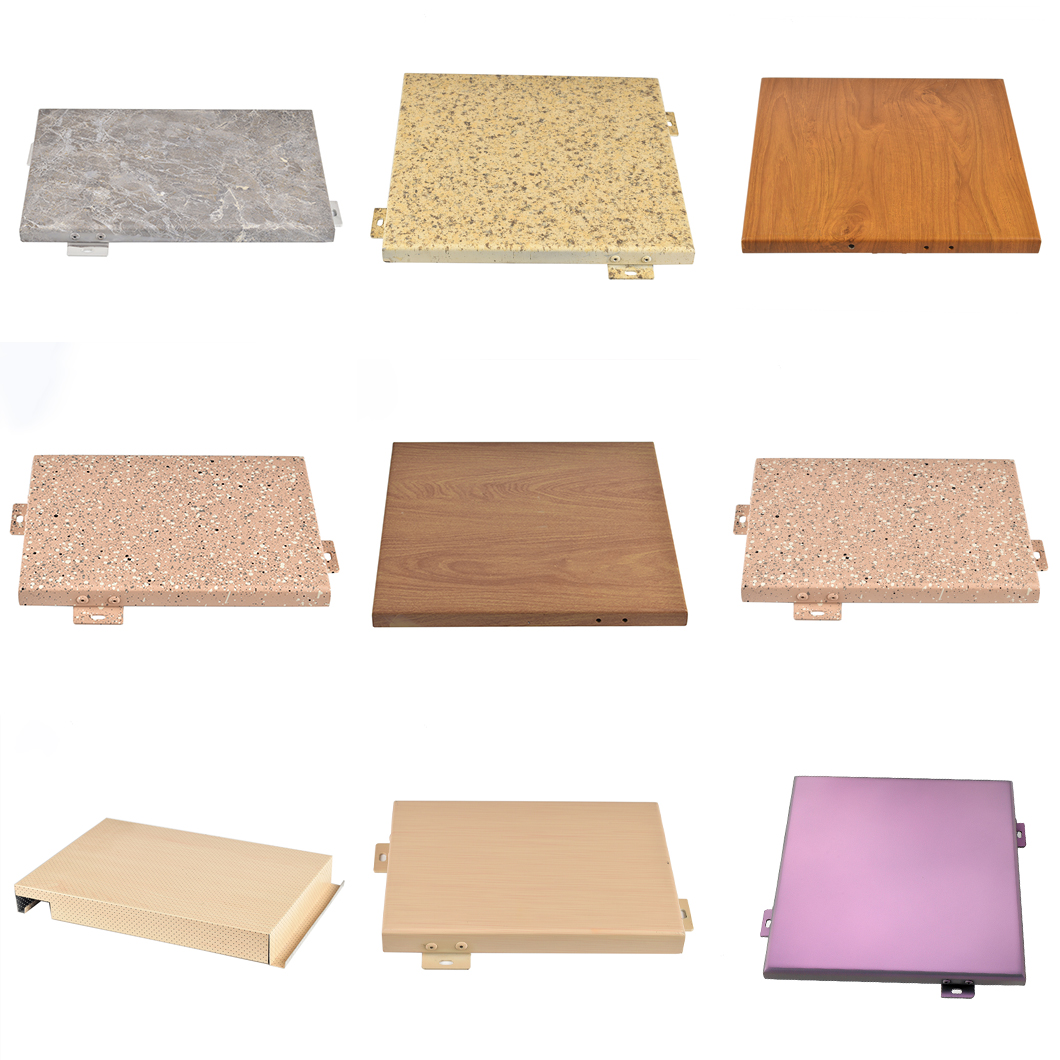
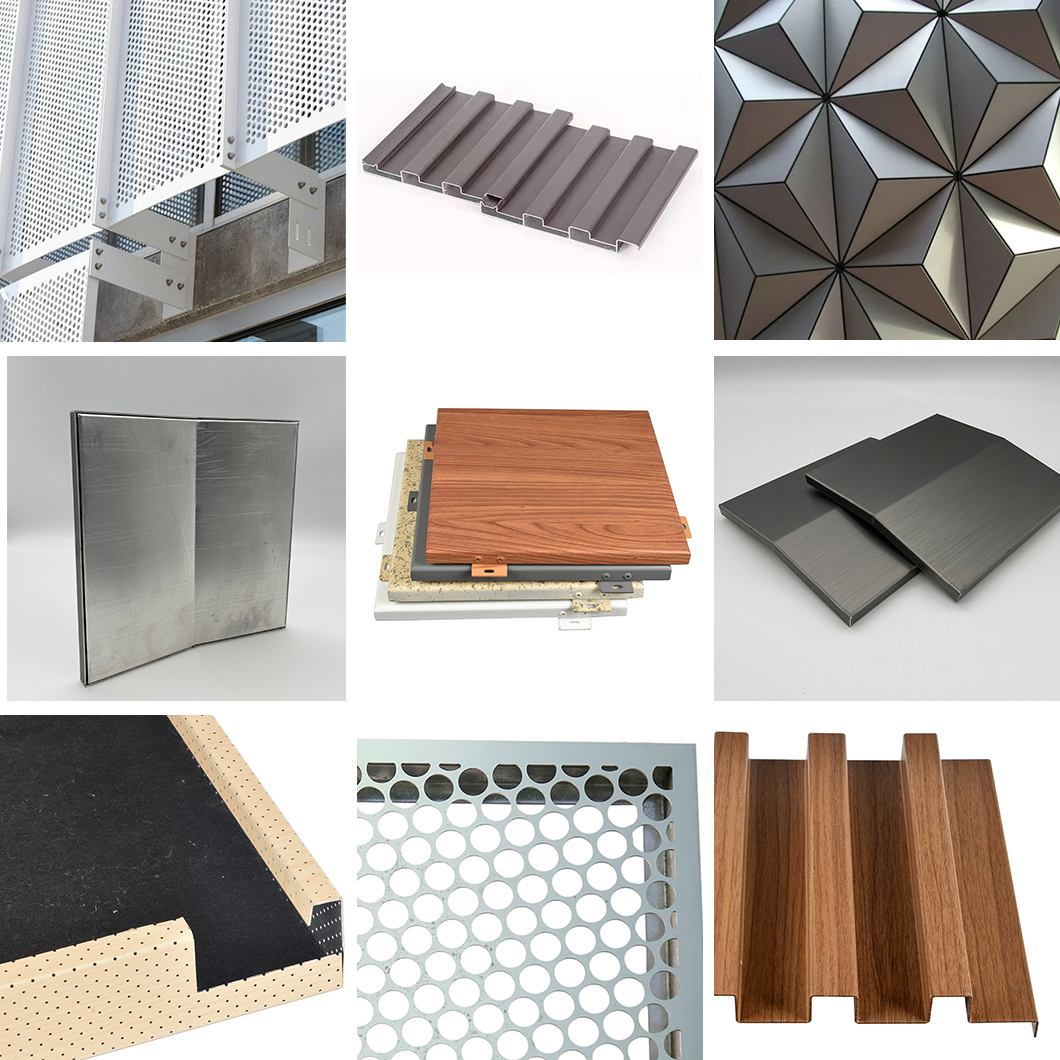
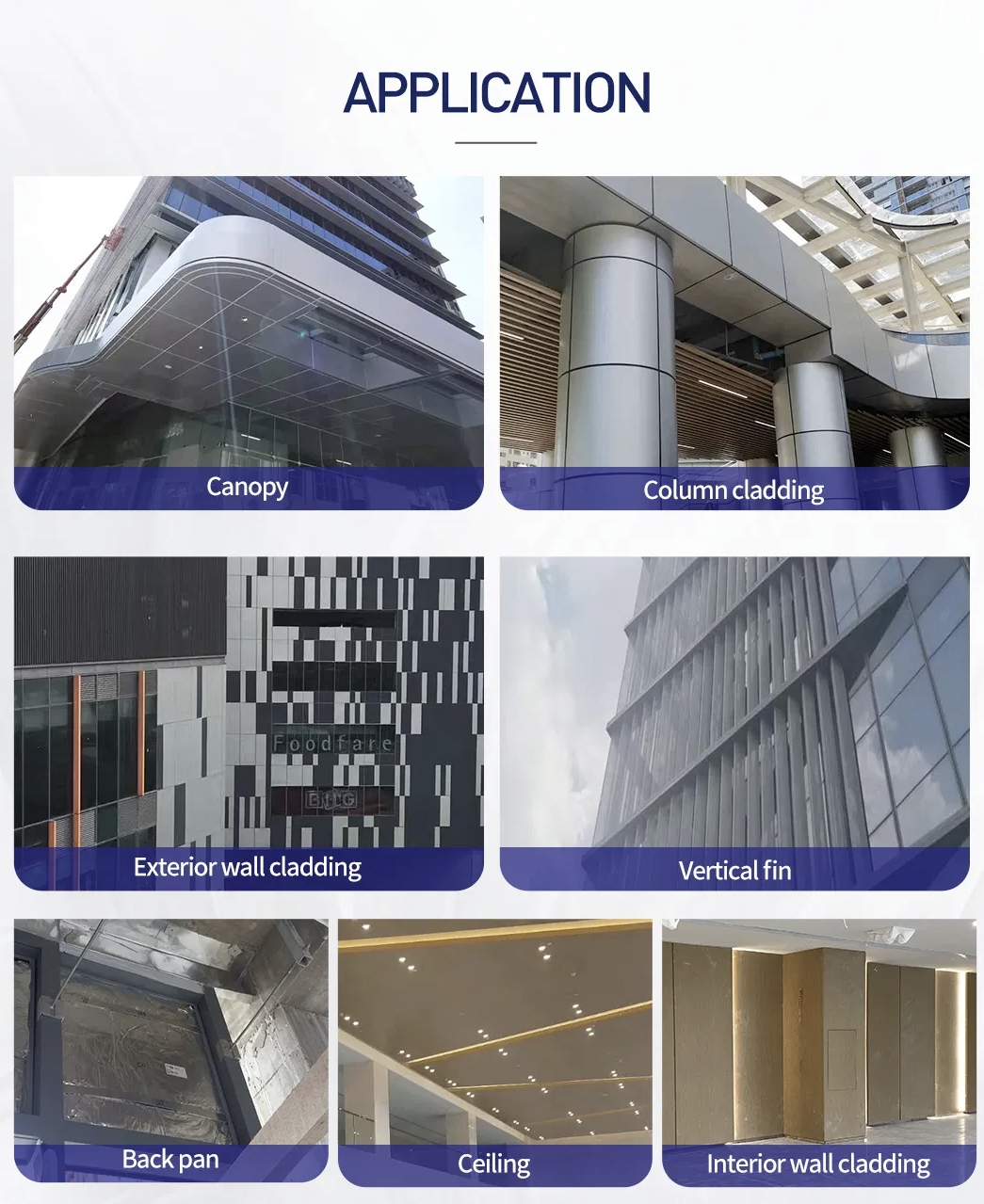
As a material for architectural curtain walls, aluminum veneer has emerged as one of the preferred choices for modern building facades, distinguished by its lightweight nature, high strength, durability, and aesthetic appeal.
In terms of mechanical performance, aluminum veneer ensures structural safety through scientific design and construction. Its structure primarily comprises a face panel, reinforcing ribs, and corner brackets; the ribs are securely attached to studs welded to the back of the panel, forming a rigid, integral unit. This configuration significantly enhances the material’s strength and rigidity, guaranteeing flatness as well as resistance to wind loads and seismic forces over the long term. For applications requiring sound insulation and thermal efficiency, high-performance insulating materials can be installed on the interior side of the aluminum panel—for instance, by filling the back of the panel with novel materials such as graphene aerogel—thereby creating a “thermal insulation–reflection–ventilation” triple-protection system.
Regarding weather resistance, the surface of the aluminum veneer undergoes a fluorocarbon spray treatment. The fluorocarbon coating—consisting of a topcoat and a clear coat—features a high concentration of polyvinylidene fluoride (PVDF) resin (specifically KANAR500) and is applied using a two-coat, three-coat, or four-coat process. This fluorocarbon coating exhibits exceptional corrosion resistance and weatherability; it withstands acid rain, salt spray, and various atmospheric pollutants, demonstrates excellent tolerance to extreme temperatures, and resists intense ultraviolet radiation. Consequently, the material retains its original color and remains free of chalking over extended periods, ensuring a long service life.
From an aesthetic perspective, aluminum veneer offers excellent processability. Utilizing a “post-fabrication, pre-finishing” workflow, it can be shaped into a wide variety of complex geometric forms—including flat panels, curved surfaces, and spherical contours—thereby fulfilling the creative visions of architects. The coating is applied with uniform consistency, offering a rich and diverse color palette; furthermore, it can be finished to simulate textures such as wood grain or natural stone, delivering outstanding visual impact.
In terms of energy efficiency, the lightweight nature of aluminum veneer optimizes the thermal performance of the curtain wall system. During the renovation of the Guangzhou Tower (colloquially known as “The Little Waist”), the integration of fluorocarbon-coated aluminum veneers with a double-skin “breathing” curtain wall system resulted in a 5°C reduction in the amplitude of indoor temperature fluctuations, thereby significantly enhancing occupant comfort. Furthermore, the building’s energy consumption was reduced by 15% to 20% compared to traditional curtain wall systems, contributing valuable credits toward green building certification.
Post time: Apr-07-2026